What It Really Tells Us About Startup Power
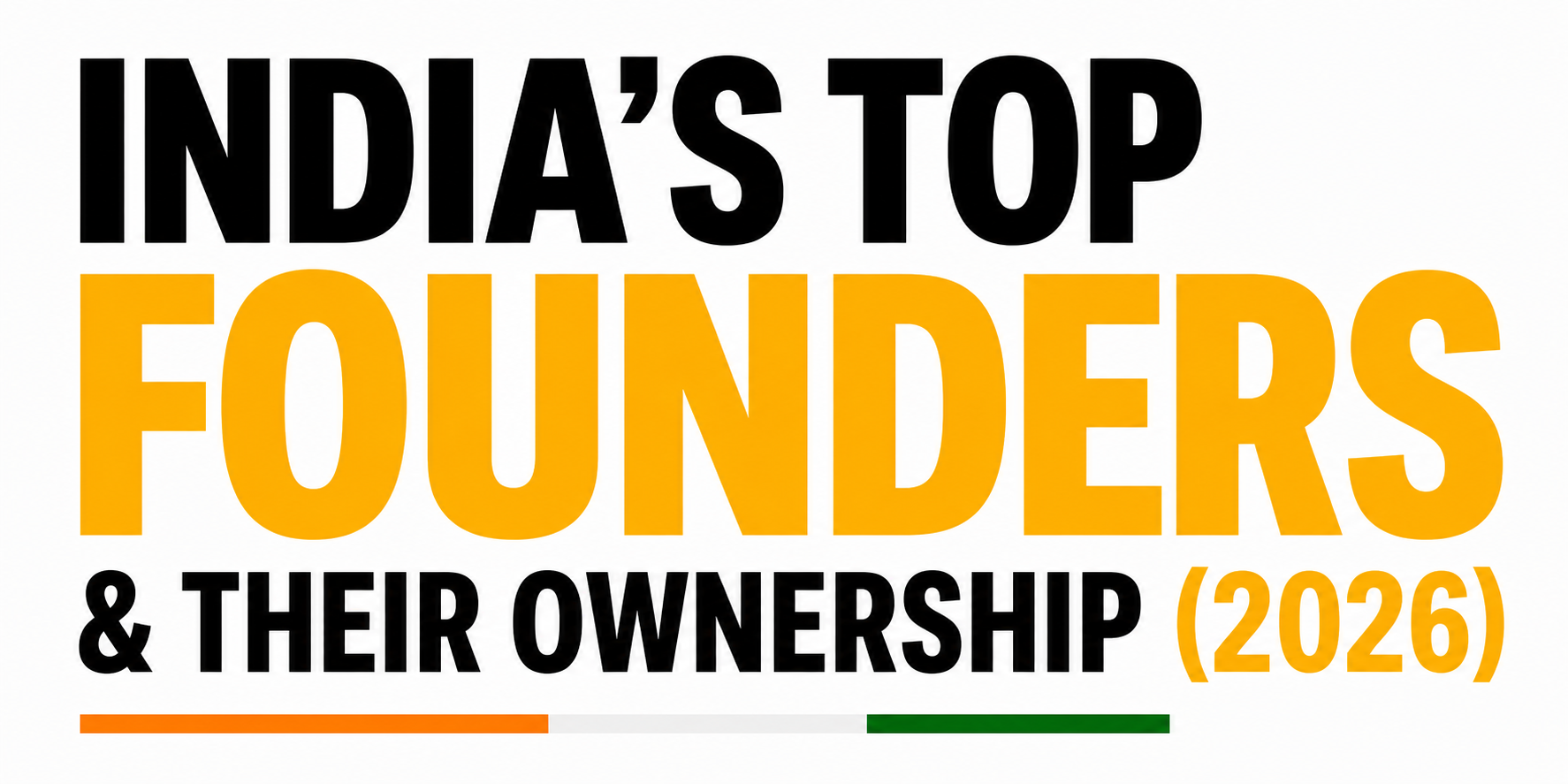
India’s startup ecosystem has matured rapidly, but one thing still separates great founders from the rest – ownership. The image highlights some of India’s top founders in 2026 and how much stake they still hold in their companies. And honestly, the numbers reveal a deeper story about control, vision, and long-term wealth creation.
Let’s break it down in a simple, human way
Founders Who Still Own Big
1. Falguni Nayar – 53.5% (Nykaa)
This is massive.
Falguni Nayar holds more than half of her company even after going public. That means she still controls decisions and direction. It’s a rare example in startup world where founders dilute heavily.
Lesson: Build slow, build strong, and don’t give away control too early.
2. Amit Jain – 28% (CarDekho)
Amit Jain has maintained a strong stake, showing a balanced approach—raising funds but still holding significant ownership.
Lesson: Smart fundraising = growth + control.
3. Saurabh Munjal – 23.5% (Lahori Zeera)
A D2C brand founder with strong ownership. This shows bootstrapped or low-dilution growth works well in consumer brands.
Lesson: D2C brands can scale without heavy dilution.
Mid-Level Ownership Founders
4. Harshil Mathur – 10.2% (Razorpay)
5. Vidit Aatrey – 10% (Meesho)
These are high-growth startups where multiple funding rounds reduced founder ownership.
Lesson: Fast growth often comes with dilution.
6. Harsh Jain – 7.5% (Dream11)
Despite lower ownership, the company’s valuation makes his stake extremely valuable.
Lesson: % kam ho sakta hai, par value huge ho sakti hai.
Lower Ownership But Big Impact
7. Tarun Mehta – 6.63% (Ather Energy)
8. Kunal Bahl – 3.94% (Snapdeal)
9. Ghazal Alagh – 3.06% (Mamaearth)
10. Sameer Nigam – 2.5% (PhonePe)
These founders built massive companies but diluted heavily across funding rounds.
Lesson: Scale comes at a cost—ownership dilution.
What This Means for Aspiring Founders
If you’re building a startup (especially in India), this data gives you 3 powerful insights:
1. Control vs Growth Trade-off
- High ownership = control
- Low ownership = faster scaling (via funding)
2. Bootstrapping is Underrated
Founders like Falguni Nayar prove that you don’t always need heavy VC funding.
3. Dilution is Not Always Bad
Even 5–10% in a billion-dollar company = life-changing wealth.
Winners Says
Startup success is not just about valuation it’s about how much of the company you still own.
Some founders build unicorns.
Others build wealth + control + legacy.
The smartest founders?
They balance all three.
Disclaimer
The ownership data in this article is based on publicly available information and may change over time. This content is for informational purposes only and not financial or investment advice. Please verify details independently before making any decisions.